
North Pine clears the brush, dead fuels, and overgrowth around your home so a wildfire has less to feed on and a real chance of moving past you instead of through you. If you live out in the pines anywhere around Spokane, this is the most important thing you can do for your property before fire season.
We’re firefighter-owned, so we’ve stood on the line and watched which homes make it through a fire and which ones don’t. The difference usually isn’t luck. It’s the work that was done, or skipped, in the months before the smoke showed up.
Get a free estimate or call or text (509) 435-2347.
What is defensible space?
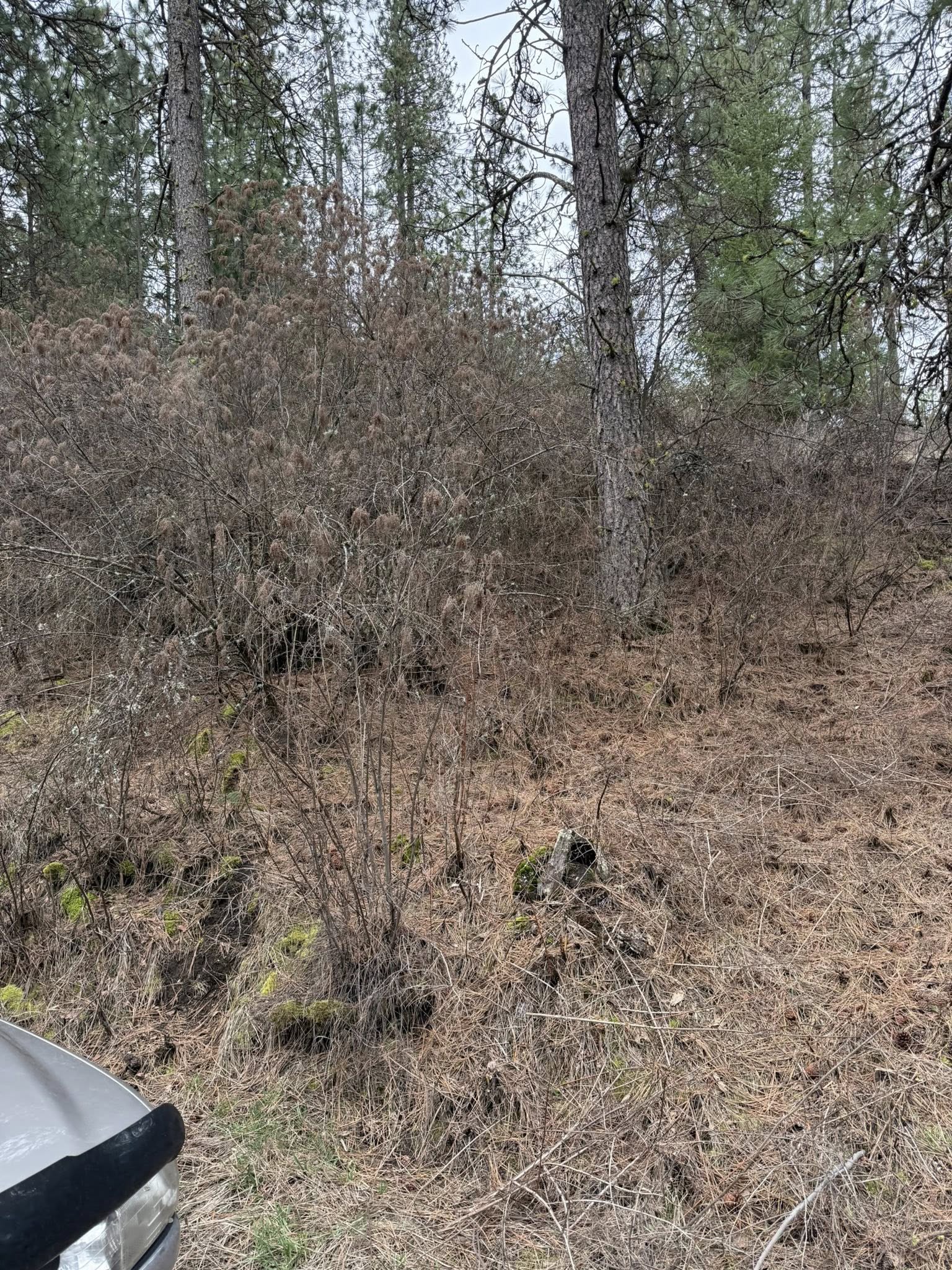
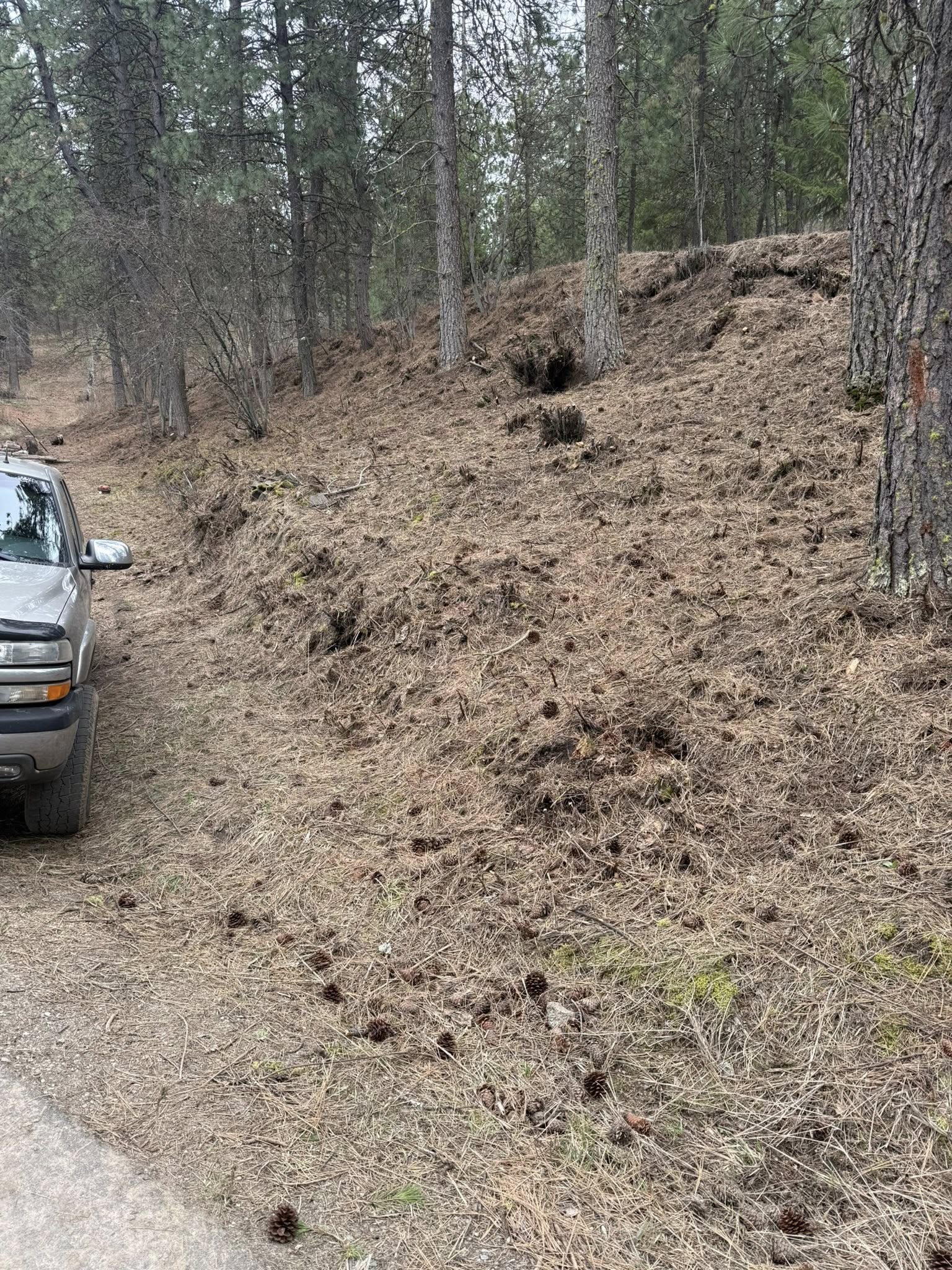
Defensible space is the managed buffer of cleared and thinned vegetation around your house. It slows a fire down, drops the flames closer to the ground, and gives firefighters somewhere safe to actually stand and defend your home.
A lot of folks hear “defensible space” and picture a bare dirt moonscape. That’s not it. You don’t have to bulldoze your land or cut down every tree you love. The goal is to break up the fuel close to the house so flames can’t climb straight from the grass to a shrub to a low branch and right up to your roofline.
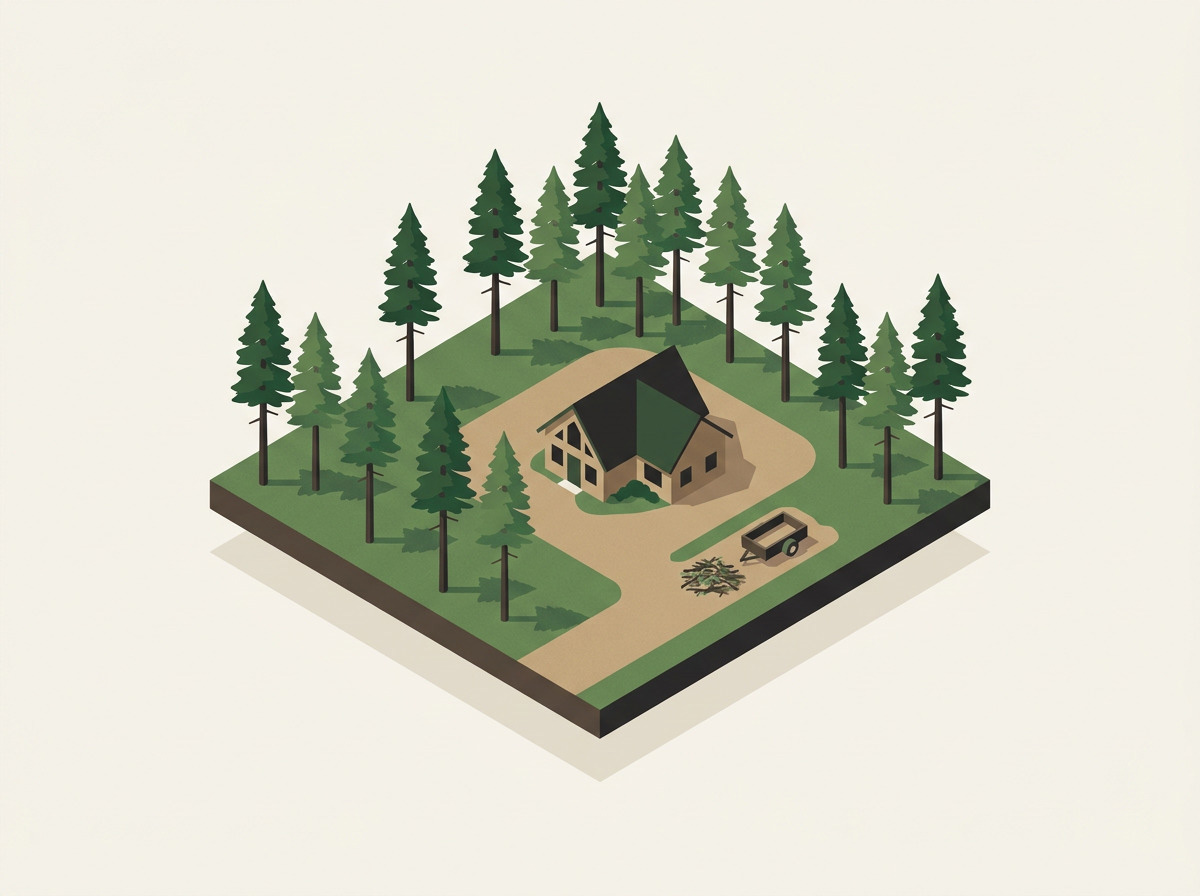
Around here, most properties come down to three zones:
- The first 5 feet (right up against the house). This is the one that matters most and the one people ignore the most. Embers landing in bark mulch, dry leaves in the gutter, or a juniper hugging the siding are what burn houses down. We pull the fuel back off the structure.
- 5 to 30 feet out. Here we break things up. We space out shrubs, limb up the lower branches on trees, clear the dead stuff, and get rid of anything that lets fire ladder upward.
- 30 to 100 feet out. Thinning and cleanup. We keep the healthy trees, open up the spacing between them, and haul off the accumulated brush and slash that’s been building for years.
Slope, how thick your trees are, and what’s growing changes the exact spacing, which is part of why an on-site look beats any online checklist.
What we handle
- Defensible space creation: the whole zoned buffer around your home and outbuildings.
- Ladder fuel removal: cutting out the low growth that lets a ground fire climb into the tree canopy.
- Fuel reduction: thinning out the built-up brush and dead material across your property.
- Pine tree limbing: limbing up the lower branches so fire can’t ladder up the trunk.
- Slash removal and hauling: piling, chipping, and hauling off everything we cut so you’re not left with a fire hazard of a different kind.
We’re firefighter-owned, so we’ve stood on the line and watched which homes make it through a fire and which ones don’t. The difference usually isn’t luck. It’s the work that was done, or skipped, in the months before the smoke showed up.
Get a free estimate or call or text (509) 435-2347.
Why this matters out here
Eastern Washington is beautiful country to live in, and it’s also fire country. We’ve had some hard fire years in this state, and the homes that came through them were almost never an accident.
The research backs up what we’ve seen with our own eyes. Studies cited by the Washington Department of Natural Resources suggest as many as 80% of homes lost to wildfire might have been saved if the brush around them had been cleared and defensible space created. And it’s not the wall of flame that usually gets a house. It’s embers, which can ride the wind more than a mile ahead of the fire and find every dry, overgrown spot you didn’t get to.
We’re not telling you this to scare you. We’re telling you because the fix is straightforward, and there’s a window every spring and early summer to get it done before things dry out.
Why being firefighter-owned shows up in the work
Plenty of companies will clear brush. Fewer have actually fought fire and watched how it behaves on a real piece of ground.
Because we have, we read a property differently. We notice the draw behind your house that’s going to funnel fire uphill toward you. We know which trees are worth keeping and which ones are a problem waiting to happen. We think about where a crew would need to stand to protect your home, and we clear with that in mind. It’s the same instinct that makes us show up on time and leave your place cleaner than we found it. It’s just how we work.
You can read more about how we got started, but the short version is that protecting homes is something we took seriously long before it was the name on the truck.
Will this help with my home insurance?
It can. A lot of homeowners in our area have been getting non-renewal letters or steep rate hikes tied to wildfire risk, and clearing defensible space is one of the few things you can actually do about it on your end.
We document the work with before-and-after photos, which gives you something real to show your insurer when they ask what you’ve done to reduce risk. We can’t promise what any particular company will decide, since every carrier is different. But having the work done and documented puts you in a much stronger spot than a verbal “we cleaned it up some.”
There's money to help pay for it
Where we work
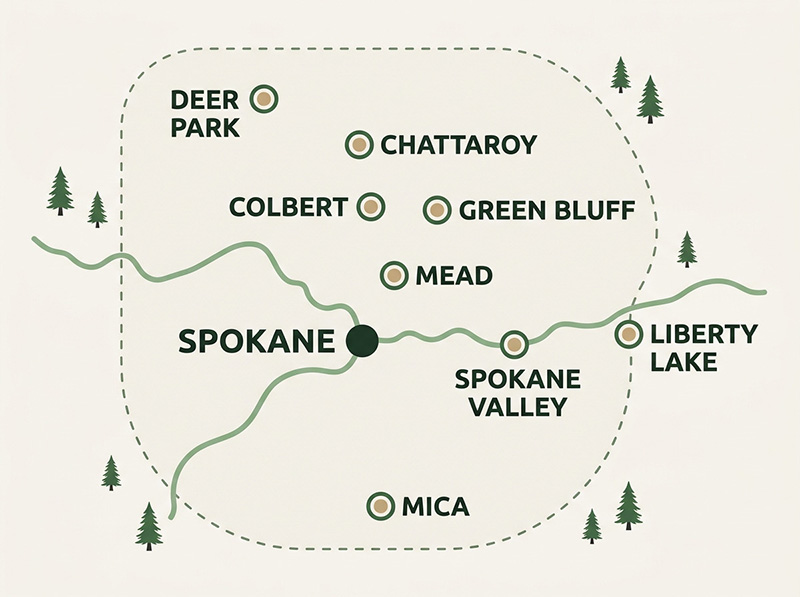
We handle fire mitigation across the Spokane region, including Spokane, Colbert, Green Bluff, Deer Park, Chattaroy, Mead, Liberty Lake, Spokane Valley, Mica, and the surrounding rural areas. If you’re in the trees somewhere near Spokane and you’re not sure whether you’re in our range, just ask.
Frequently asked questions
When's the best time to do fire mitigation?
Late winter through early summer, before everything dries out. That said, the right time is whenever it isn’t done yet. If you’re heading into fire season unprepared, it’s worth doing now.
Do I have to cut down all my trees?
No. Good mitigation keeps the healthy trees and the look of your property. We thin, space, and limb so the trees that stay are an asset, not a fuse.
How much does fire mitigation cost?
It depends on the size of the property, how overgrown it is, slope, and access. That’s why we do a free on-site estimate instead of guessing. Depending on your situation, cost-share programs may cover part of it.
Do you haul everything away?
Yes. We pile, chip, or haul off what we cut so you’re left with a cleaner, safer property and no slash pile to deal with.
Are you licensed and insured?
Ready to protect your property?
Get a free estimate and we’ll build a plan for your land. No pressure, no hard sell, just an honest look at what your place needs.
Get a free estimate or call or text (509) 435-2347
Licensed • Bonded • Insured